
![[Sushi Tech Tokyo 2025] Hub for Innovation and Networking](/media/images/tokyo-big-sight-sushi-tech-tokyo-.2e16d0ba.fill-1200x480.png)
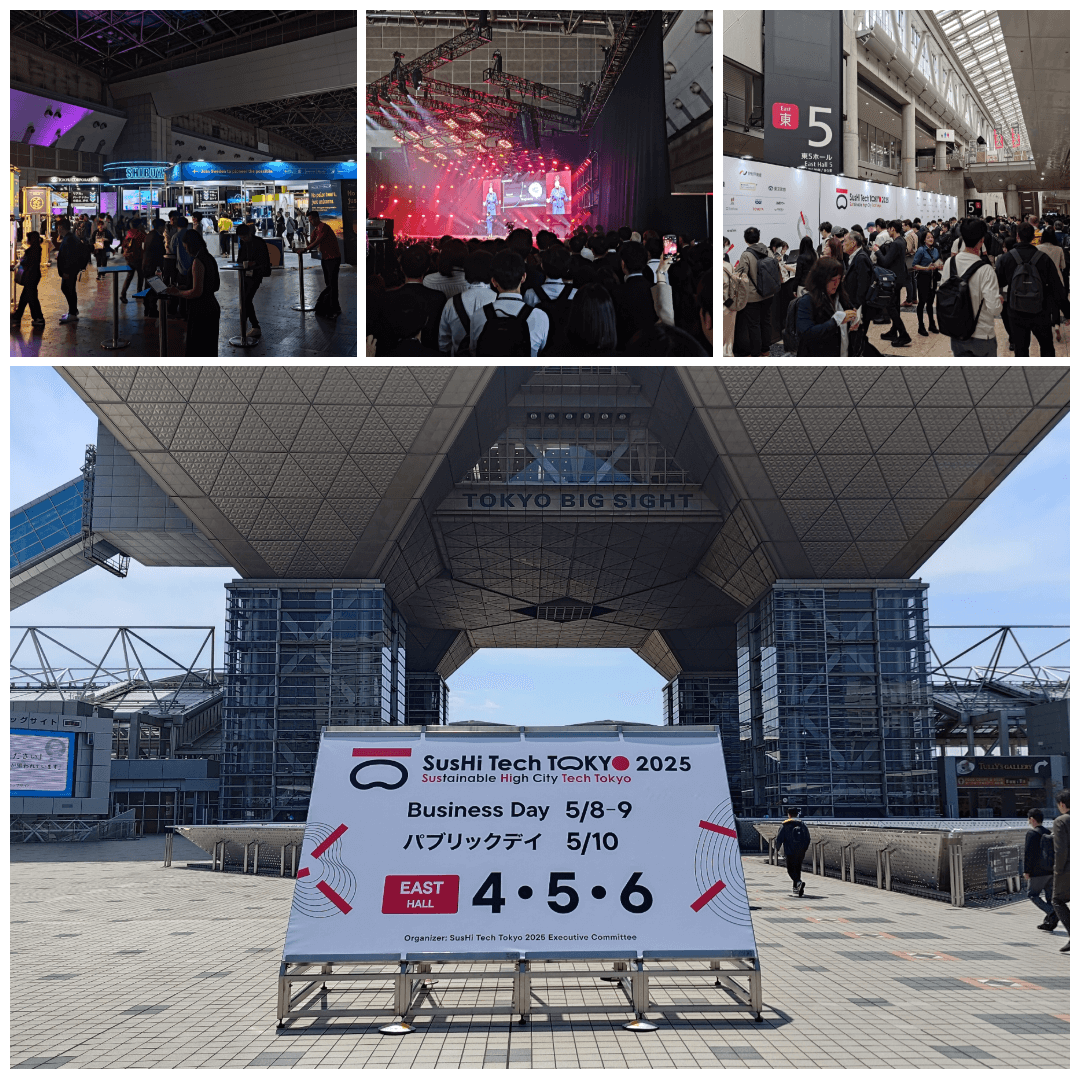
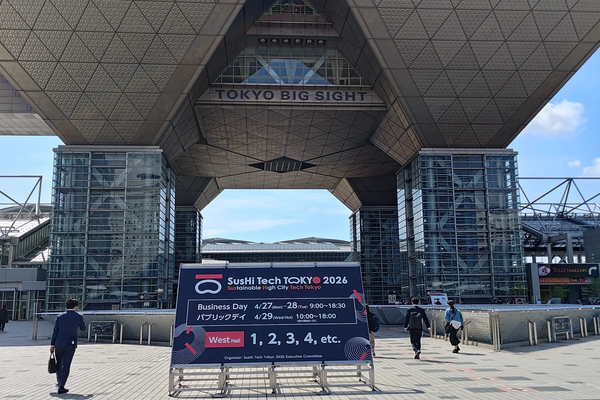
I attended SusHI Tech Tokyo for the first time last week, held at Big Sight. SusHI Tech Tokyo is one of Asia's largest startup conferences. The event ran from May 8th to May 10th, but I only visited for the first two days, which were designated "Business Days" – focused on conducting business. The final day was a "Public Day," open for general attendees to experience the conference.
Upon registration, the organizers provided me with discount coupons to share within my network, and I wrote about this in this post.
Access
Access to Big Sight is available via public transportation from Kokusai Tenjijo Station (R-03) or Tokyo Big Sight Station (U-11).
A free shuttle bus service also departs on a fixed schedule from the Tokyo Innovation Base (TiB) located at Yurakucho. As I often use the Yurakucho Line to commute, this is a great benefit. If you can get to Yurakucho, using the shuttle bus from TiB will save you money and reduce walking distance. The bus journey from TiB to Big Sight takes approximately 25 minutes.
Day 1
We decided to fill our schedule with meetings on the first day, scheduling a total of five. Our goal is to find partners who will work with us to enhance online marketing for startups and SMEs using Kafkai.
Looking for Resellers! If you are interested in partnering with us to support our customers in creating strategic, competitive content, please get in touch! For more details on the reseller program, visit here.
SusHI Tech offers a matchmaking function that allows participants to be searched and meetings requested based on set criteria. If a match is made, you can schedule a time and place to meet.
I made a mistake by leaving my matchmaking settings as 'free space' without specifying meeting space usage. To the folks at SusHI Tech: if you're reading this, your UI didn't clearly indicate how to adjust this setting, and UX also failed to highlight that option. I'm hoping for an improvement next year.
As a result, I spent most of my time standing in a corner of the booth chatting with people. In some ways, it forced everyone to get straight to the point, but yeah, I think we could have handled it better.
There were 13 stages in total, and many sessions ran concurrently. It was impossible to catch every session, but I managed to sit down and watch a few interesting ones.
Session: Building Social Infrastructure with AI by Google for Startups
When I saw the title of this session on the timetable, "Building Social Infrastructure with AI," my curiosity was piqued. What exactly does that mean?
The panel included Mo Batran, an entrepreneur from Egypt working on startups in Tokyo and California; Ryoko Manabe, Managing Director at Alchemist Japan; Emiri Grimes, CEO of Yuimedi Inc.; and as moderator, Shino Tsuchiya from Google For Startups.
Japanese AI startups are increasingly focused on building global businesses, supported by accelerators like Alchemist Japan and Google for Startups. These programs emphasize scalable products, multinational diverse teams, and securing international investment, with xMap's success being a prime example, having raised tens of millions including funding from overseas.
Google for Startups and Alchemist Japan offer comprehensive support, including mentorship, cloud credits, access to global networks, aiming to help Japanese startups overcome the challenge of struggling internationally even after achieving local success. Alchemist’s program concludes with a follow-up phase based in the US, while Google's new Founders at Campus initiative provides lifelong support without taking equity.
The ultimate goal is to foster a Japanese startup ecosystem that can go global, encouraging founders to build diverse teams, leverage available resources, and construct products that are not constrained by geography. This collaborative effort aims to connect Japanese innovation with international markets, promoting the sustainable growth of startups from Japan.
While there were many marketing pitches about how Google supports startups due to being sponsored by Google For Startups in this particular session, a key takeaway I gathered was that building an ecosystem for startups and focusing on AI within it can contribute to developing infrastructure that society needs.
Session: Malaysia Text Spotlight
The next session I attended was the Malaysia Text Spotlight session.
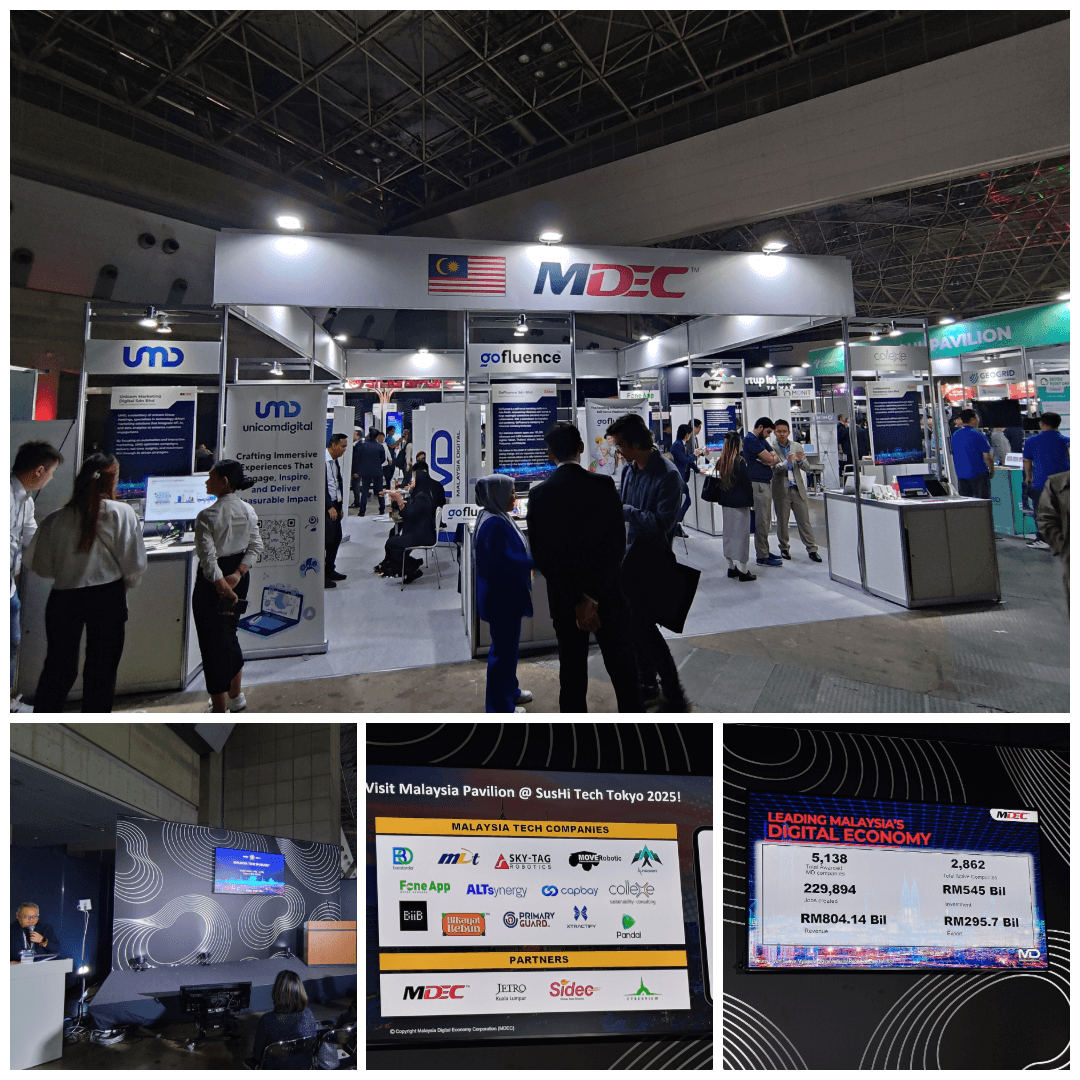
Malaysia's Digital Economy Ecosystem Strengthens AI, Cybersecurity, and Startup Scalability Globally
Led by the Malaysia Digital Economy Corporation (MDEC) and Selangor state, the Malaysian digital economy ecosystem aims to globally bolster AI, cybersecurity, and startup scalability. This initiative addresses challenges such as customer insight gaps, a shortage of cybersecurity experts, and fragmented brand loyalty. By promoting regional integration and digital adoption in sectors like finance and agriculture, Malaysia targets contributing 25% of its GDP through the digital economy by 2035.
To tackle these issues, the ecosystem champions policy support, tech zones, and open partnerships. Key strategies include offering policy and visa support to foreign entrepreneurs, developing Malaysia’s largest AI and tech accelerator, and establishing an IC design park to aid semiconductor and AI startups. MDEC supports over 4,000 digital companies, while SIDEC focuses on scaling GPU-backed AI startups. The initiative also prioritizes upskilling 60,000 engineers and collaborating with Japanese firms for market localization.
Initiatives like FoneApp and Extractify seek investors and showcase innovative solutions at the Malaysia Tech Showcase, showing promising results. FoneApp projects revenue of RM60 million by 2024, while Extractify’s AI technology enhances marketing insights. The digital economy push has generated RM80 billion in revenue and created 229,894 jobs to date. With strategic focus on AI, semiconductors, fintech, and cybersecurity, Malaysia positions itself as a regional leader, with significant contributions expected from IPO- and Series B-bound startups.
🇲🇾 Malaysian Startups at SusHI Tech Tokyo 2025
Meet some of the Malaysian startups exhibiting at SusHI Tech Tokyo 2025:
-
Boostorder – AI-powered B2B order and payment automation platform for brands and distributors.
-
Sky-Tag Robotics – Provides automated solutions for automotive, healthcare, semiconductors, and more industries.
-
Move Robotic – Specializes in warehouse automation using autonomous mobile robots and storage systems.
-
Alphaswift Industries – Offers custom drone solutions for logistics, agriculture, and surveillance applications.
-
FoneApp – Hyper-reward app that converts daily expenses into community-based rewards.
-
CapBay – Provides supply chain financing solutions for SMEs.
-
Collexe Consulting – Offers IT services and sustainability consulting for businesses.
-
BiiB – Mobile platform specializing in running challenges and participation events.
-
Hikayat Kebun – Promotes sustainable agriculture and gardening practices.
-
Primary Guard – Delivers comprehensive cybersecurity solutions and IT infrastructure management.
-
Xtractify – AI-powered document processing and automation solutions for businesses.
-
Pandai – Online learning app to help students excel through quizzes and educational content.
Day 2
On day two, I made it my mission to visit booths and meet as many people as possible.
One of the reasons I enjoy attending conferences and exhibitions is that everyone present generally comes with a shared purpose: to network and learn something new. Due to limited seating at lunch, I ended up sharing a meal with someone I didn’t know, but by the end of it, they were no longer a stranger. After visiting their booth, I found out they work for Review, a company with an interesting business model focused on enabling businesses to utilize public data. Their marketing reports can be viewed here: link and here.
I also stopped by Infloso to say hello. Their CEO, Utkarsh, had announced on the HackerNews (HN) Tokyo Slack channel that they would be exhibiting at SusHI Tech in the India Pavilion. Their product is a dashboard that allows companies to plan, execute, and track their online marketing campaigns all from one place. Imagine running Google, Facebook, X, and Instagram ads all from a single dashboard.
I also visited NunoX Technologies, a company creating software that visualizes and simulates various types of fabrics. NunoX scans fabric, converts it into data, trains AI models, allowing for quick testing to see how fabric combinations will look before actual production begins.
Another noteworthy company I visited to hear their pitch was VRITIMES, which provides press release coverage for media. Their differentiator is a focus on Southeast Asian media, which could be of interest to many Japanese companies looking to expand into international markets.
Session: Fostering Innovation and Growth: DEI Strategies in Startups and Corporations
One particularly impressive session I attended on day two was about diversity, equity, and inclusion (DEI).
In my community work, I’ve been a founding member of the Python Software Foundation’s Diversity and Inclusion Working Group and one of the directors at the non-profit Python Asia Organization. The primary goal of these initiatives is to increase diversity and inclusion in the technical community of Python programmers and users.
When I saw this session on the schedule, naturally, I was eager to hear from panelists about their experiences developing and implementing DEI strategies within their organizations.
The panelists included Sarah Liu, Founder & Managing Director at TDC Global, Sudesh Thevasenabathy from Manulife based in Hong Kong, and Mio Asatani, Founder/CEO of Curina Inc.
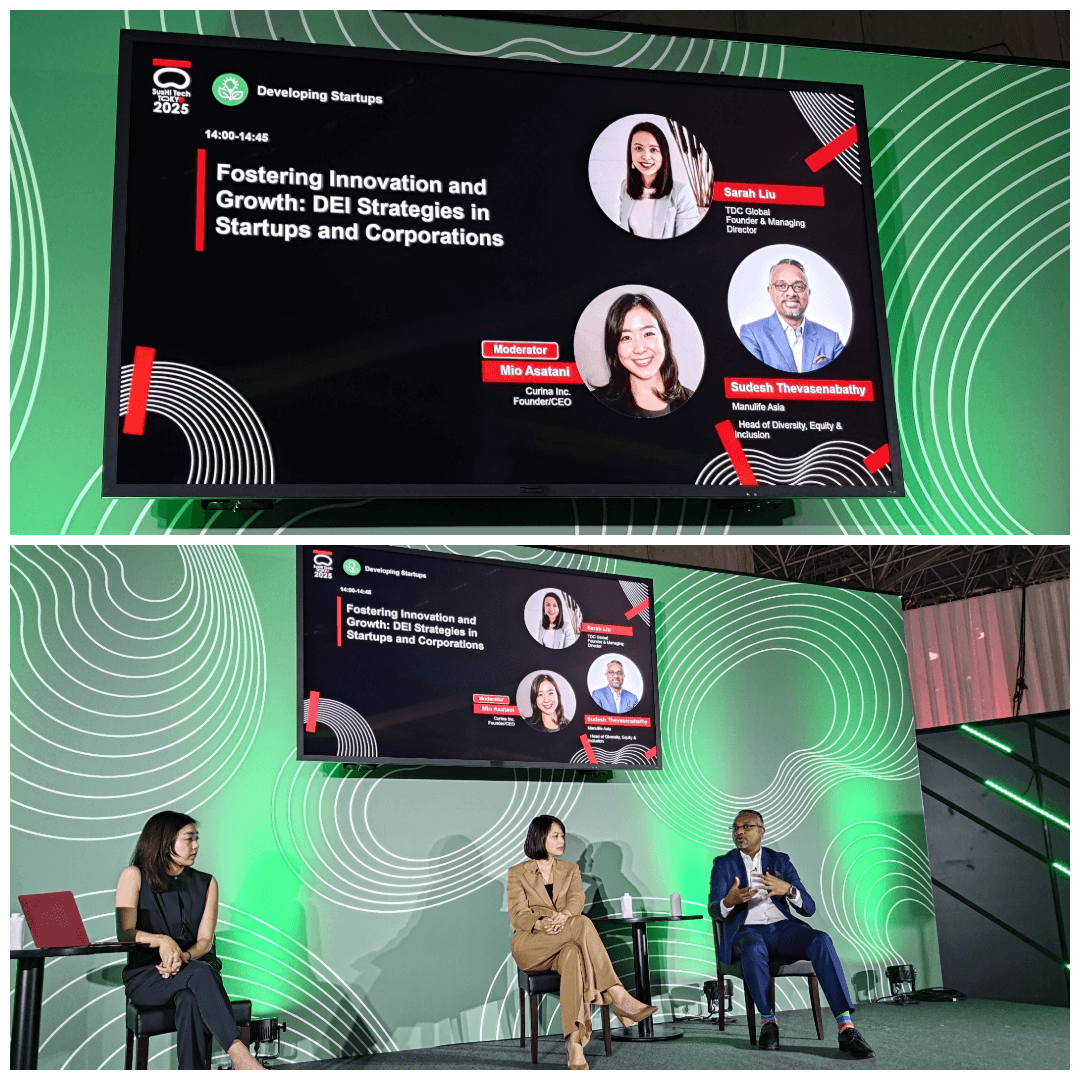
Diversity, Equity, and Inclusion (DEI): A Business Strategy, Not Just an HR Function
Integrating diversity, equity, and inclusion (DEI) as a business strategy—rather than just an HR function—is crucial for innovation, product design, and sustainable growth. The discussion emphasized the importance of authentic DEI initiatives beyond superficial efforts, particularly in Western contexts where this term has become politicized. Companies should proactively audit their DEI readiness, take leadership positions, and prioritize inclusive hiring practices from inception, especially at startups.
Genuine DEI implementation requires challenging assumptions and adopting data-driven approaches to correct systemic imbalances, as exemplified by Manulife’s success in increasing the proportion of women in leadership roles from 13% to 42% over five years. Asian companies are uniquely positioned to cultivate inclusive environments by leveraging cultural strengths like respect (敬) and hospitality (礼), attracting diverse talent, and expanding market reach while boosting business relevance. Boycotts against companies perceived as lacking authentic DEI commitment underscore the importance of earning customer trust through genuine dedication.
While measuring DEI progress with KPIs is vital initially, the ultimate goal is to embed inclusion so deeply in company culture that individual tracking becomes unnecessary. This transformation requires leadership accountability, a commitment to confronting bias, and recognizing inclusive hiring not as just fairness but as securing business future-proofing while accessing broader, more creative talent pools.
MDEC Networking Night: Malaysia-Japan Industrial Exchange
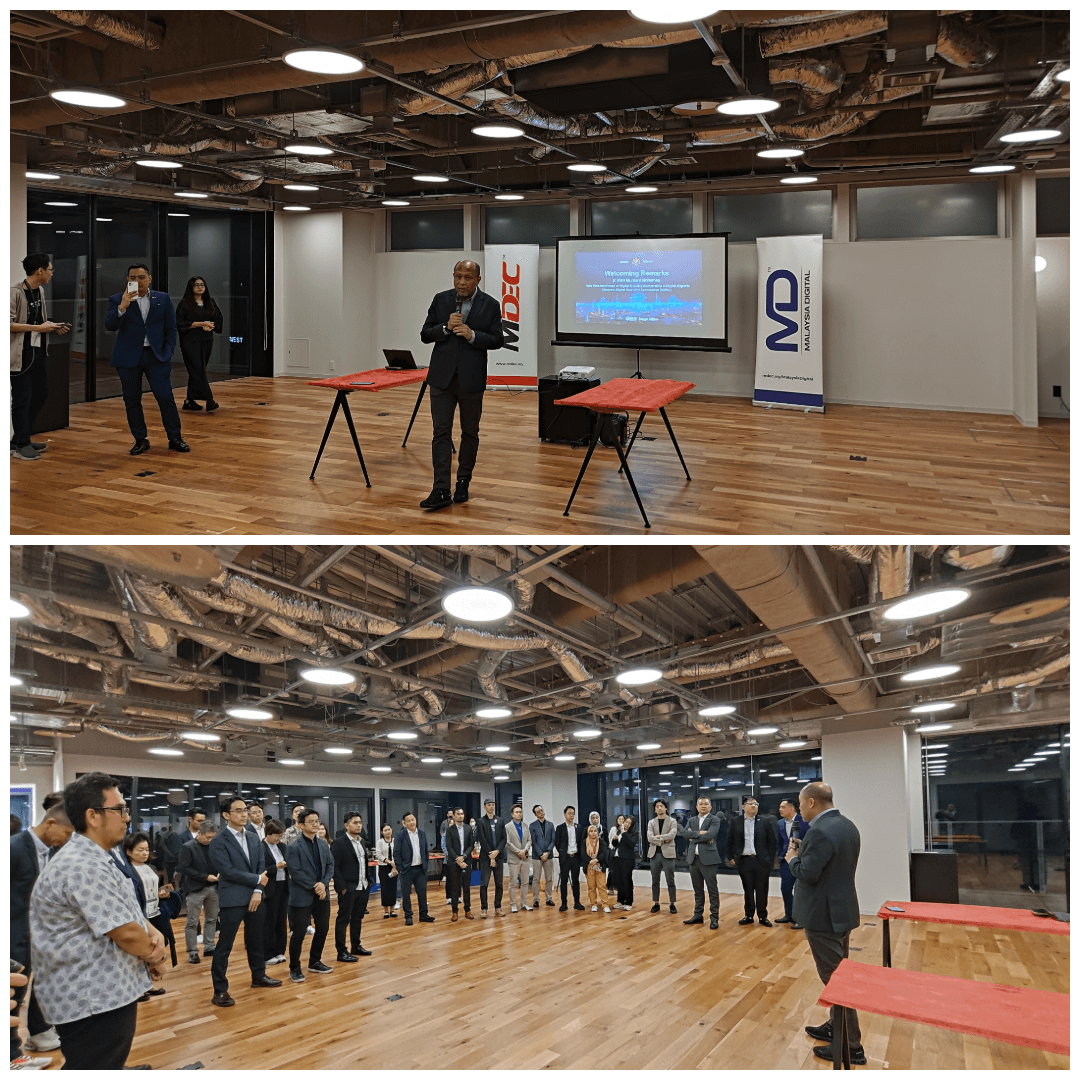
Malaysia Digital Economy Corporation (MDEC), Malaysia, hosted a networking event after the second day concluded. I was invited and had the opportunity to meet business leaders from both Malaysia and Japan. Traditional Malaysian cuisine was served, which we enjoyed while engaging in conversation with one another. The event saw about 40 attendees, including representatives from startups, private and public companies, and Selangor state government officials.
The Malaysian delegation included a startup that participated to introduce themselves at SusHI Tech Tokyo 2025, expressing keen interest in opportunities for market entry into Japan. I was pleased to share my perspectives on the business environment, opportunities, and challenges related to expanding into the Japanese market.
Photos from the event are available through MDEC’s media release on X.
Summary
Two days at SusHI Tech Tokyo – a lot of walking, a great time, and meeting fascinating people, learning much along the way. I didn't expect anything more from an exhibition. If I’m still in town next year, I’ll likely attend again, and if you’re interested in tech, you should too.
Memo to myself for next year:
- Overall, exchanged business cards with over 30 people, hoping to build more meaningful connections.
- Covered a total of 20KM and 30,000 steps over two days.
- Bring your own lunch: The lunch lines were long, choices limited, and the prices relatively high. Plenty of eating space though.
- Schedule meetings using the provided meeting spaces.
- If there’s a shuttle bus again, use it.
Thank you for reading this short report. Maybe we’ll meet at SusHI Tech Tokyo next year! 👋🏾