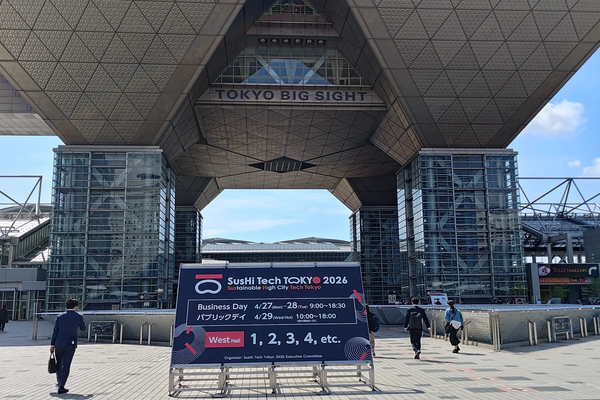

The first day of SusHi Tech Tokyo 2026 — Asia's largest startup and innovation conference — opened on Monday, 27 April at Tokyo Big Sight. TechCrunch's pre-event coverage called it less a conference than a deal room: 750 startup exhibitors, 60,000 attendees expected over three days, 151 sessions, city leaders from 49 countries, and 10,000 facilitated business meetings booked through the official matchmaking app before most attendees even landed. The Japan Times flagged it as the largest edition yet.
As one of this year's official ambassadors — and a first-time exhibitor — I'm writing daily reports from the floor. This is Day 1.
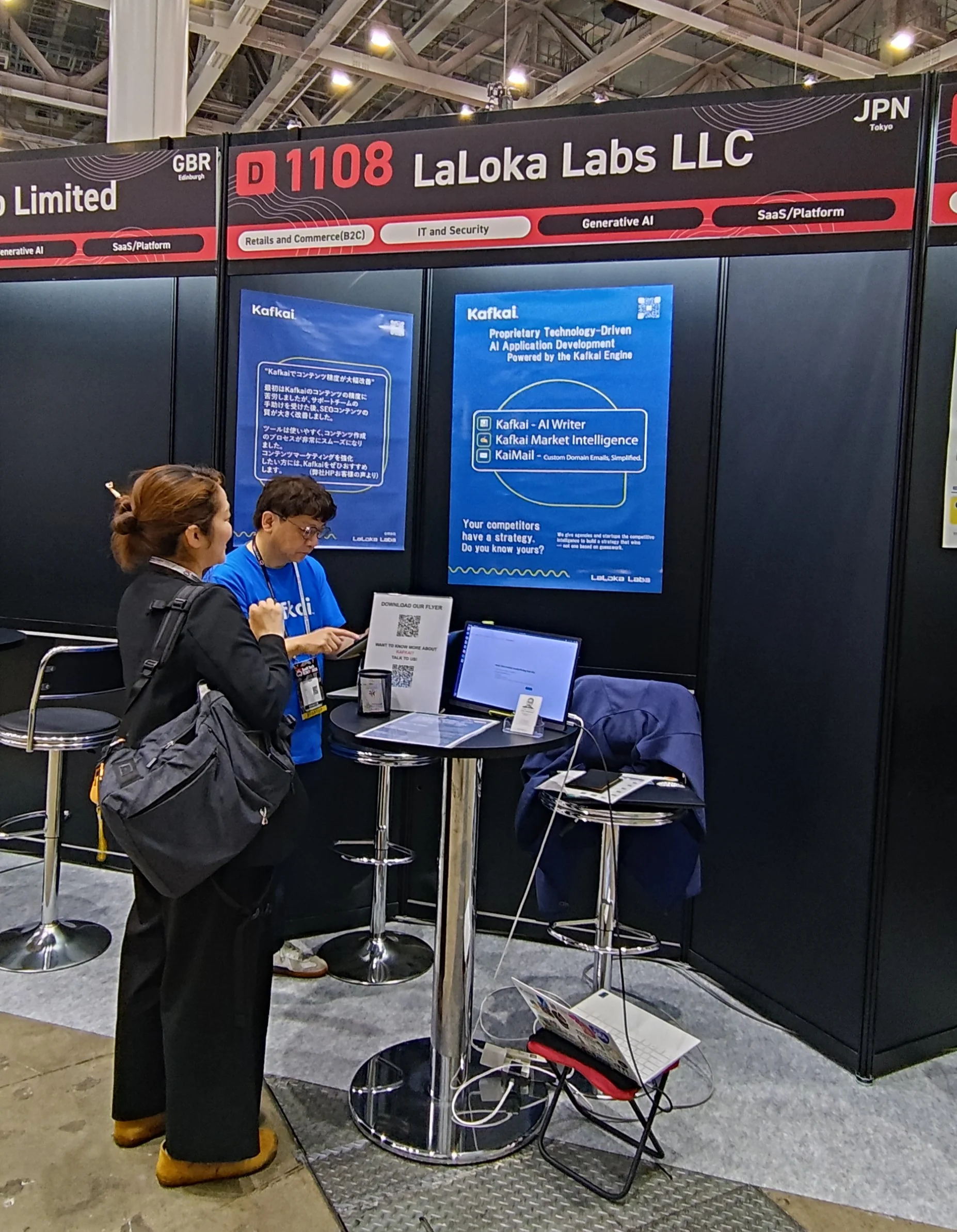
LaLoka Labs At Booth D1108 West Hall 2
LaLoka Labs is exhibiting at SusHi Tech for the first time this year, at booth D-1108 in the 西2エリア (West Hall 2), classified across four tracks the organisers grouped together for our profile: Retails and Commerce (B2C), IT and Security, Generative AI, and SaaS/Platform. We announced the exhibition and our official Ambassador appointment on the Kafkai blog back in December, and I separately wrote up the city-wide partner events worth catching during SusHi Tech week — film festivals, rooftop walks, classical music concerts, and our own meetup on Day 2.
The booth is showcasing the full LaLoka Labs product line: Kafkai as our AI Writer, Kafkai Market Intelligence for competitor SEO and content strategy, and KaiMail for custom-domain email forwarding. The framing on the wall poster — "Your competitors have a strategy. Do you know yours?" — is the pitch we've been refining all year, and it landed cleanly with founders and agency owners walking past.
If you're attending, drop by D-1108 in West Hall 2 — happy to talk shop, run a live competitive intelligence demo on your domain, or just trade conference notes.
The Wettest Welcome In Recent Memory
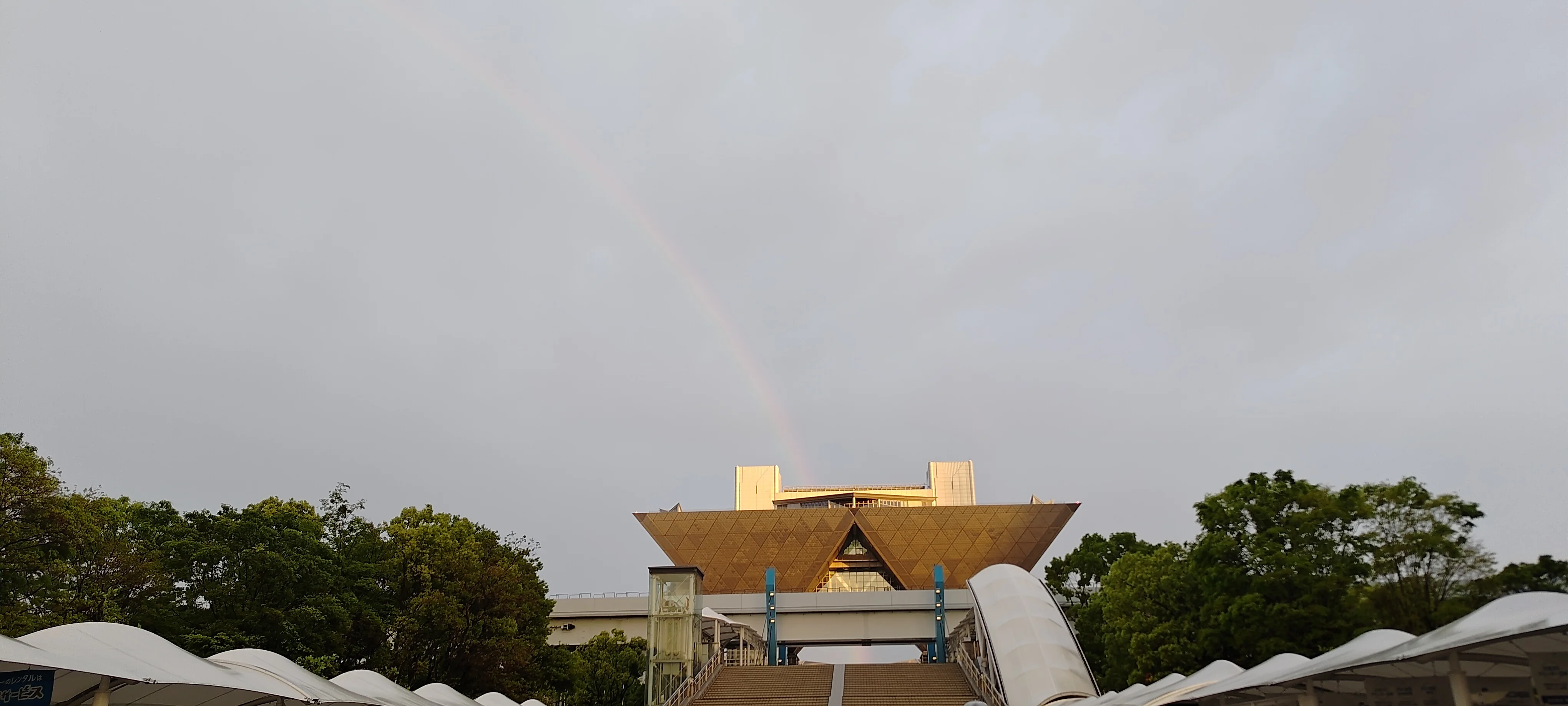
Big Sight on Monday morning was a war zone. Heavy rain combined with the kind of strong winds Tokyo Bay specialises in — the sort that turns umbrellas inside out before you've even crossed the bridge from Kokusai-Tenjijō station. Most of us arrived already half-soaked.
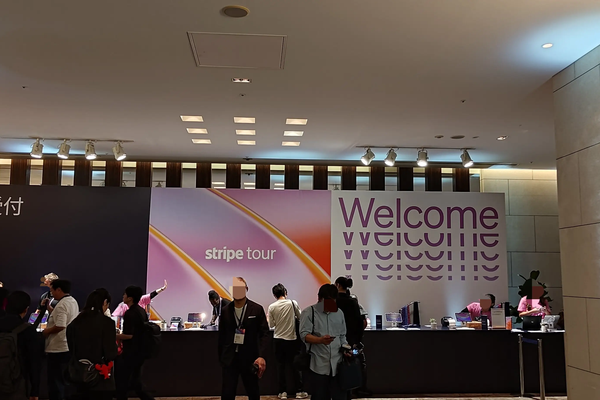
The chaos didn't stop at the door. Long queues snaked through the registration area because a surprising number of attendees hadn't pre-printed their badges. SusHi Tech, despite being one of the most digitally-organised conferences I've attended, still requires a physical printed QR badge for entry. There's a printer at the on-site convenience store for exactly this scenario — and that line was almost as long as the registration line itself. A useful reminder for Day 2 visitors: print your badge at home, or accept that your first 30 minutes will involve standing damply in a queue.
To their credit, the organisers responded quickly. By Monday evening, every attendee received an email apology directly from the SusHi Tech Tokyo 2026 secretariat acknowledging that on-site badge printing demand had exceeded their forecasts and the queues had stalled as a result. They committed to two operational fixes for Day 2: re-circulating the badge download links so attendees could print at home in advance, and — more usefully — changing the entrance policy so that visitors who couldn't print could simply present the QR code on their smartphone at reception. That kind of same-day, public-facing response is genuinely uncommon in Japanese conference operations, and it deserves noting. As a person who also organizes thousand people conferences, I can appreciate these difficulties and their response.
Once inside, the scale of the event hit immediately. Twenty-two international pavilions, four thematic zones (AI, Robotics, Resilience, Entertainment), reverse-pitch sessions where corporates and city governments solicit startup solutions, and the Tokyo Innovation Vision's "10×10×10" framing visible everywhere. This is the fourth edition, and you can feel the maturation — the event has clearly transitioned from "promising new conference" into something Tokyo intends to make a permanent fixture in the global startup calendar.
Opening Keynote: Governor Koike, Taiwan, Estonia, And The Launch of G-NETS
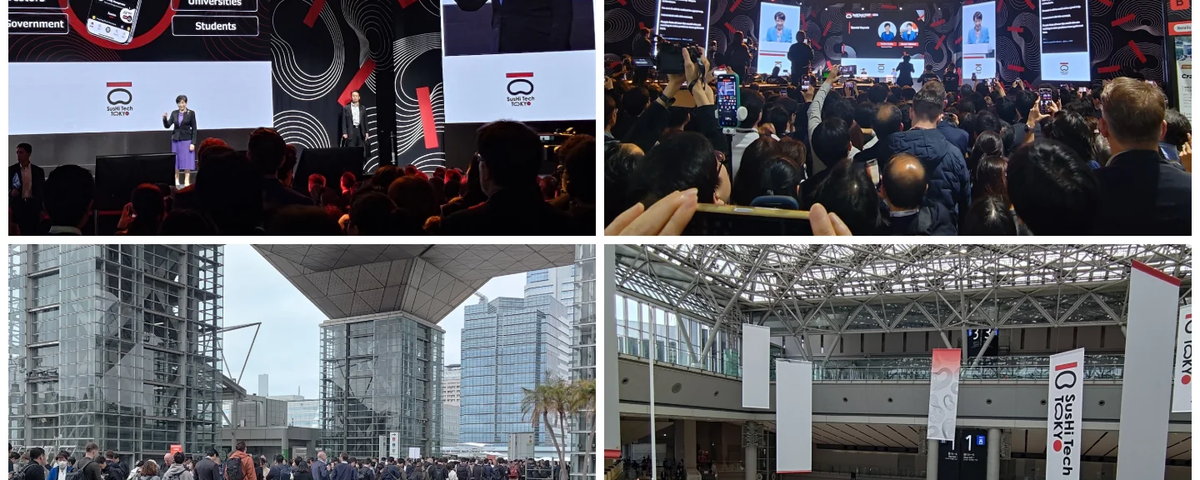
The morning's main event was the opening keynote by Governor Yuriko Koike, where the SusHi Tech Tokyo 2026 banner glowed orange across the main hall. Even arriving early, the press of bodies and forest of raised smartphones made it clear how much heavier the international turnout has become this year.
Governor Koike's address doubled as the official launch of G-NETS — the Global City Network for Sustainability — a Tokyo Metropolitan Government initiative that has now grown to include leaders from over 50 cities across five continents. This year's theme: "A New Urban Future Built on Climate and Disaster Resilience." It's an unusually concrete framing for what could easily have been generic city-diplomacy boilerplate.
The Special Guest segment introduced two notable figures. Liisa-Ly Pakosta, Estonia's Minister of Justice and Digital Affairs, delivered a thoughtful short address. She referenced Tartu — Estonia's pioneering digital city — and the Memorandum of Cooperation that Estonia and Japan signed back in 2022. Her core point landed cleanly: in the AI era, like-minded democracies have to find each other and work together, because cooperation between trustworthy partners is now a strategic necessity, not a soft "nice to have." Coming from Estonia — a country whose entire national digital identity infrastructure has been a global reference point for two decades — this isn't abstract talk.
Alongside her was Dr. Peng Chi-ming (彭啓明), Taiwan's Minister of Environment. His presence made deep sense in the context of G-NETS: Peng is a meteorologist by training (PhD in atmospheric sciences), founded Taiwan's first private weather company before entering government, and has attended 11 UN Climate Change Conferences as a civic observer. Under his leadership, Taiwan is rolling out a carbon pricing system explicitly modelled on Japan's, with a planned cap-and-trade market scheduled to follow. Having both a digital-governance minister and a climate-governance minister flanking Koike on the keynote stage was a quiet but precise statement about what Tokyo wants G-NETS to be about.
What followed was one of those genuinely impressive pieces of stagecraft: city leaders walking up one after another to be welcomed alongside Governor Koike. From my vantage point I caught the Mayor of Yerevan; Singapore's Divesh Vasu Dash (Minister of State and Mayor of Southeast District); the Mayors of Porto, San Salvador, Turin, Moreton Bay, Helsinki and Kofu; the President of Gilly Municipal Authority; the Leader of Glasgow City Council; the Governor of Jakarta; and the Chairman of the Manila Metropolitan Development Authority. Most of these names might not mean much to most readers — but the cumulative effect of a dozen-plus city leaders standing together on stage, with two ministers flanking Koike, was the most powerful signal so far that Tokyo's positioning as a city-to-city diplomatic hub is real, not aspirational.
PM Takaichi's Address: The Room Could Not Contain The Crowd
If you thought Governor Koike's keynote was crowded, you weren't ready for Prime Minister Sanae Takaichi. The crowd that gathered to hear Japan's 104th Prime Minister was, frankly, insane. Phones in the air, people standing on chairs at the back, attendees who couldn't get into the hall watching on the side screens — at one point I genuinely worried about whether the aisle was still functioning as an aisle.
PM Takaichi's address was framed around what she called "responsible active fiscal policy" — meaning, in her telling, that achieving a strong Japanese economy requires excellent science and technology as the foundation. Several themes stood out:
- Startups are now ~4% of Japanese GDP, and that share has grown 32% in the past two years. This is a meaningful jump from when "startup ecosystem" in Japan was largely a slide in someone's METI deck.
- A Japan Growth Strategy Council is being formed, with cross-cutting attention to deep tech and startups.
- The government is moving toward an SBIR-style procurement model — where ministries adopt startup-developed technology themselves and become anchor customers, rather than just writing grant cheques.
- Local universities are being pushed to commercialise research through startup spinouts more aggressively, with municipal procurement as additional demand-side support.
This was not a vague "we love startups" speech. It was specific, mechanism-focused, and pitched directly at the founders in the room. Whatever one's politics on the broader Takaichi government, the speech was a clear signal that startup policy continuity from previous administrations is being maintained — and arguably accelerated.
Conversations On The Floor
The keynotes are the headline, but SusHi Tech's actual value sits in the floor-level conversations. Here are the four most substantive ones I had on Day 1.
Shiba Yuka — コークス・コンテンツパートナーズ (Cox Content Partners)
Shiba-san stopped by our booth — she's a first-time attendee at SusHi Tech this year, scoping out the conference rather than exhibiting. Her own company was incorporated literally on April 1st, so she's at the very earliest stage of operationalising what is, by background, a deeply experienced content practice.
Her career path is interesting: she was at ITmedia handling B2B lead-gen tie-up articles (the kind that get sold via lead-magnet pipelines to enterprise software vendors), worked as an editor and director, then went back to being a writer because the planning side bored her. She's now building her own content practice — and crucially, she's building her own AI-assisted pipeline using a self-hosted LLM, focused specifically on extracting the real substance from interview recordings.
Her diagnosis of where most "AI content" goes wrong was sharp: most writers just dump interview transcripts into ChatGPT, which then produces something readable but mechanically loses the points the interviewee actually wanted to make. Brand voice and editorial intent get washed out in the process. Her tool is designed to preserve those.
We spent a good chunk of time talking about how this could complement Kafkai. My platform handles the upstream layer — SEO data, competitor analysis, keyword positioning, content briefs based on actual market gaps. Hers handles the downstream craft layer — taking interview material from real subject-matter experts and turning it into branded content that sounds like the company, not like an LLM. The natural collaboration is obvious; we'll be following up.
Adham Fayumi — CEO, Rymba (rymba.my)
Over at the Malaysia Pavilion I sat down with Adham Fayumi, CEO of Rymba. Their tagline — "Transforming Conservation With Forest Intelligence" — captures it well: they combine drones, satellite imaging, and AI to turn forests, urban green spaces, and conservation areas into clear, actionable data for governments, developers, and ESG-reporting corporates. Adham was recently on the MIA Digital Month 2025 panel on sustainability reporting tools alongside Deloitte and PETRONAS, which gives a sense of the credibility Rymba has built within Malaysia's ESG-reporting ecosystem.
Their pitch deck breaks the technology stack into three layers:
- Drones — high-resolution and multispectral, mapping forest canopies, detecting stress, monitoring regrowth in remote or dense terrain.
- Satellites — continuous, large-scale ecosystem monitoring for tracking forest loss and recovery over time.
- AI — analysing massive volumes of drone and satellite data to surface biomass, carbon storage, and biodiversity patterns invisible to humans.
They were selected through MDEC and SIDEC (Selangor Information Technology and Digital Economy Corporation) for the SusHi Tech pavilion. What's particularly interesting about Rymba's go-to-market is that they have a Japanese investor who's plugged into Japanese corporates that need sustainability reporting — the example Adham gave was tracking environmental impact around Honda's Southeast Asian warehouses. ESG reporting in Japan is becoming progressively less optional, and the demand for credible, defensible environmental data is growing fast.
Joe Poh — Chief Revenue Officer, MatrixInvent
A few booths over, I bumped into Joe Poh from MatrixInvent. Their product is at the opposite end of the data spectrum from Kafkai: where I deal in internet-scraped marketing data, they deal in raw machine sensor data — handling between 100,000 and one million tags per second from industrial equipment.
Their customer list reads like an industrial-tech who's-who: Petronas, Air Selangor, the Indianapolis 500 racing series, and — this is the part that made me sit up — US Navy nuclear submarines and aircraft carriers. The pitch is that there are only three or four companies in the world that can do what they do at this scale, with the rest sitting in the US, UK, and Australia.
The technical claim that stayed with me: their database can fit roughly 20 years of operational data in 1GB. That's a compression and indexing achievement that, if true, fundamentally changes the economics of long-tail industrial telemetry. On top of it sits a natural-language query layer — so an engineer can ask "how did engine room 3 perform last week" and get an answer without writing SQL. For a Navy ship under attack making decisions about whether engines can sustain another month, this kind of querying speed isn't a nice-to-have.
We agreed it's a different stack from mine but worth exchanging profiles. Industrial AI is one of those domains where everyone's talking but very few have the actual data infrastructure to back it up. MatrixInvent quietly does.
Syukur Wahab — Director, Pixelence (pixelenceai.com)
The last substantive conversation of the day was with Syukur Wahab from Pixelence, another Malaysian startup at the pavilion. Pixelence is a Software as Medical Device (SaMD) play with one of the more interesting technical pitches I heard all day: they use an AI predictive model to eliminate the need for gadolinium contrast dye in brain MRI.
For context: when imaging brain tumors, the standard workflow involves injecting a gadolinium-based dye to make the tumor location visible at high precision. The full process can involve seven separate stages with repeated injections. Gadolinium is well-documented to be harmful — it damages the body, and once excreted it persists in waterways as a metal compound that doesn't break down naturally. The broader academic literature on AI-based reduction or elimination of gadolinium contrast in brain MRI has been growing for years, but Pixelence is one of the few companies turning this into a regulated SaMD product in Asia.
Pixelence's model works on a fresh non-contrast MRI scan and predicts where the tumor sits with sufficient accuracy that, in many monitoring scenarios, the dye becomes unnecessary. Their public claim is 95% predictive accuracy and ~100 minutes of patient/hospital time saved per visit. The high-value use case is patients being monitored over long periods — somebody being scanned 17 times to track tumor progression no longer has to be injected with gadolinium 17 times. They're trained on thousands of brain datasets, currently raising venture capital, and pragmatic about competition: the dye giants like Bayer have ~$10 billion in liabilities and operations tied to gadolinium products, so the strategy is to reduce dye usage, not replace it overnight.
Our conversation also wandered — into the size of the Malaysian community in Japan (about 5–6,000 registered, mostly students who rotate every four years), into MAJECA and JAMECA (the Malaysia–Japan chambers of commerce I'm an active participant in), and into climate change (40°C summers in Tokyo are now normal — they weren't 30 years ago when I arrived).
A Few Brief Encounters
While at Adham's booth I also met Zafirah and 宮下さん from Live A Nest Capital, one of Rymba's investors. Live A Nest is a name I already knew — I'd previously met Nur Ahmad Zaim Hussin from the same firm at an earlier MAJECA–JAMECA event. SusHi Tech is the kind of event where the connective tissue between Malaysia and Japan keeps showing up in unexpected places; it's part of the value.
Closing thoughts
Day 1 had everything: terrible weather, queue mismanagement, two unforgettable keynotes, fourteen city leaders on a single stage, and four conversations that genuinely moved my own work forward. The geographic spread of the pavilions is striking — Estonia and Singapore showing up at the highest political level, Malaysia bringing a full deep-tech contingent, and Tokyo positioning itself increasingly explicitly as the bridge between them.
For a city like Tokyo — which has historically been characterised internationally as "interesting but hard to enter" — the volume of inbound founder, investor, and policymaker traffic this week is the most concrete signal yet that things are shifting. We'll see how Day 2 unfolds.
Disclaimer: All of the things that I wrote above were based on my own memory, notes and some research I did but some (or even all!) of the names and claims made in this post might be wrong.
Onward to Day 2.