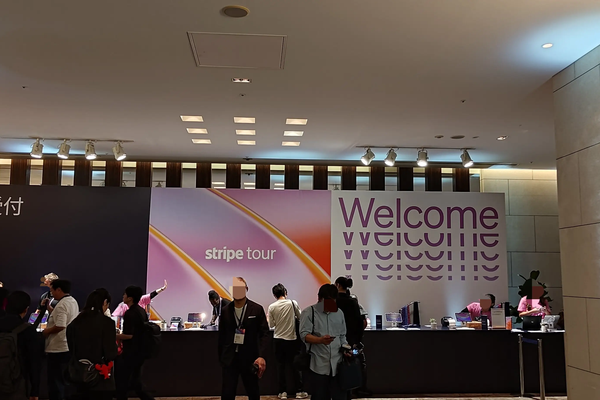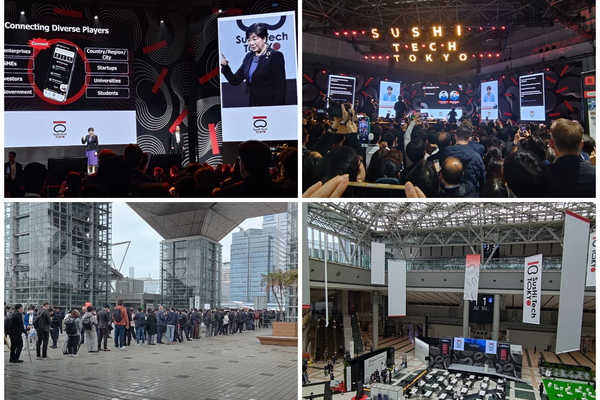

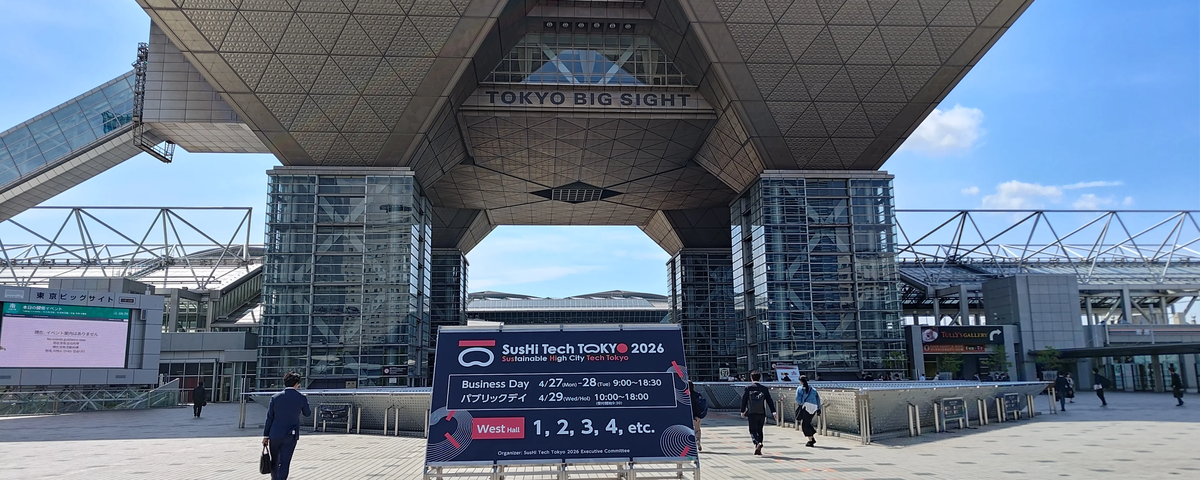
Day 2 of SusHi Tech Tokyo 2026 opened on Tuesday, 28 April with weather that was a welcomed relief and what late April is all about — bright blue skies, no wind, the kind of crisp Tokyo Bay morning that made Monday's typhoon-grade rain feel like a fever dream. If you missed the Day 1 report, the short version: heavy rain, longest registration queue I've stood in this year, two extraordinary keynotes (Governor Koike launching G-NETS, and PM Takaichi's "responsible active fiscal policy" address to a wall of phones), and a series of substantive conversations at the Malaysia Pavilion.
This is my final report from the floor, since LaLoka Labs won't be exhibiting on Public Day. Two days of being on a booth at Big Sight is enough to fill a notebook, exhaust a voice, and produce more genuine business conversations than I typically have in a quarter. Here's how Day 2 went.
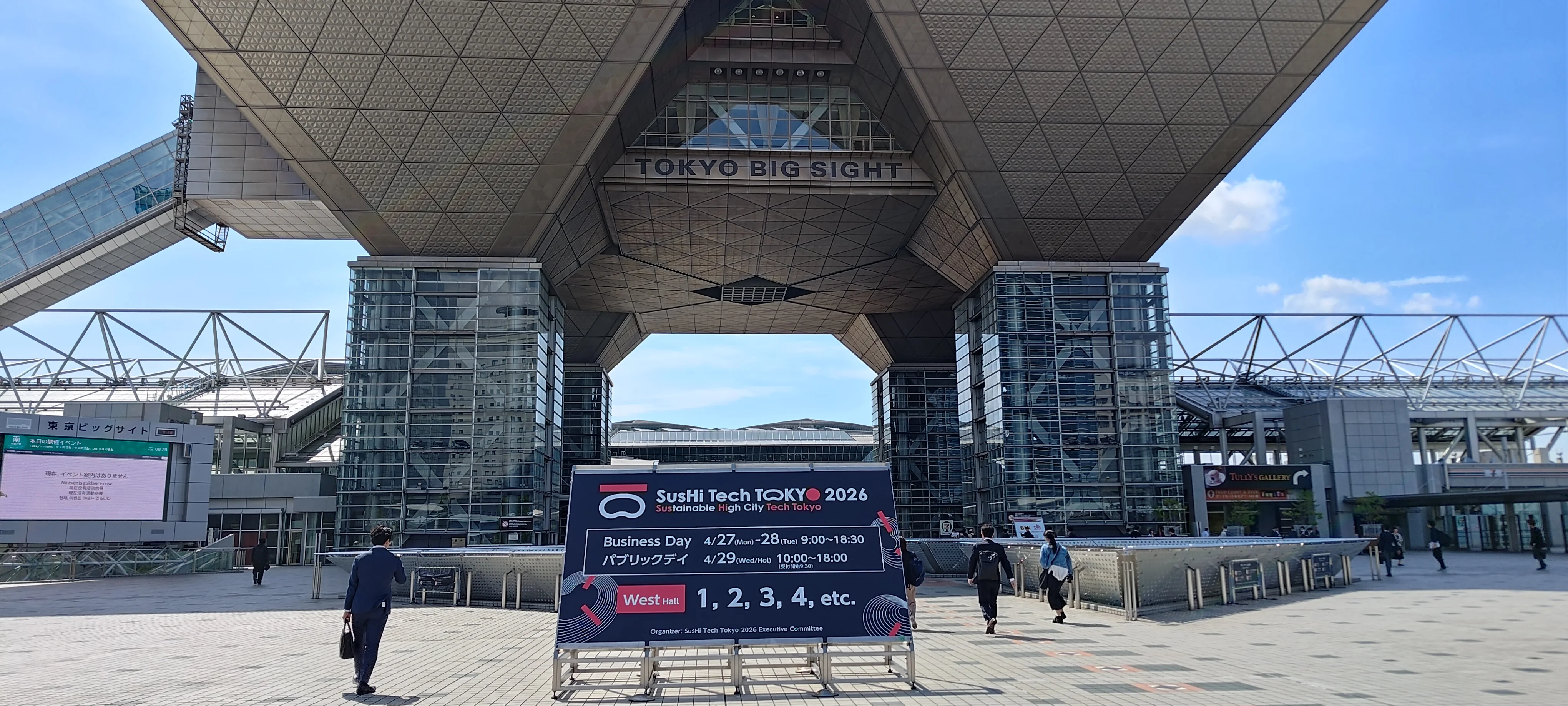
The Energy Completely Changed
The good weather did what good weather always does at trade shows: it filled the floor. Day 2 was visibly more packed than Day 1 — more crowded aisles, more sustained foot traffic, and a different type of attendee. Day 1 had a lot of curious wanderers; Day 2 had people on a mission, with specific questions and specific calendars to fill.
A small but appreciated detail: lunch queues were noticeably shorter than they were at SusHi Tech 2025. The organisers clearly learned from last year's crush (or maybe I just went for lunch after the peak time of 12PM).
I'll be upfront — I spent almost all of Day 2 on our section of the floor (West Hall 2, ground level around D-1108) and only went up to Level 4 to catch keynote sessions on the first day. There's a tradeoff in being an exhibitor: you're locked to your booth during the highest-traffic windows, which is exactly when you want to be wandering.
At The Booth: D-1108
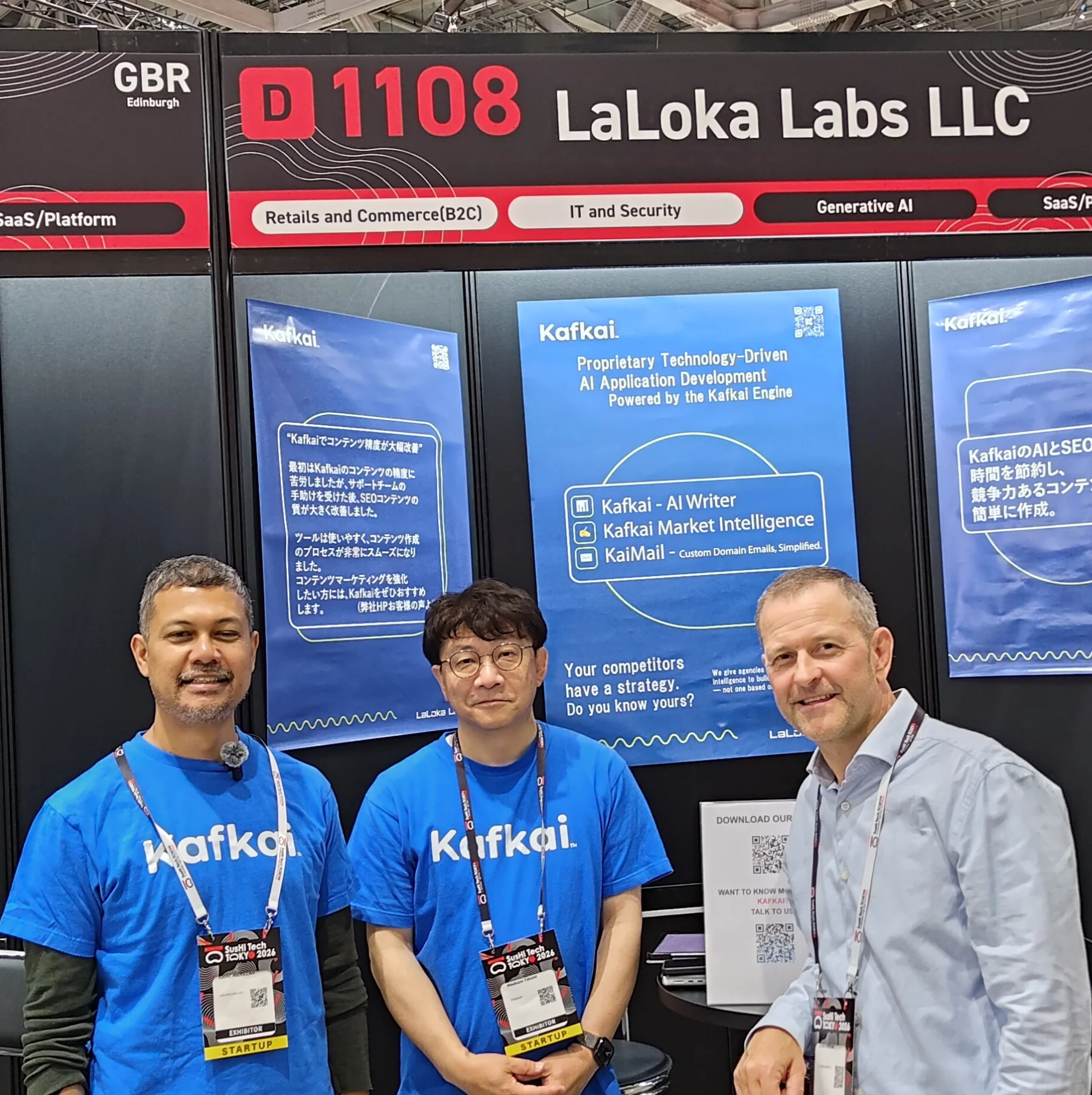
We had a steady rhythm at booth D-1108 (West Hall 2) all day. Yatomi-san — LaLoka Labs' producer — held the booth down with me, and Adrian Jones, an old friend, came in to support (thanks Adrian!)
The most striking pattern of Day 2 was who walked up. VCs were working the floor directly. Multiple times someone would stop, look at our materials, and ask whether we were raising. We're not, but the pattern is what matters: at most trade shows I have been to as far as I can remember, VCs are quarantined to a back room or curated matchmaking session. At SusHi Tech they were on the floor having actual conversations with founders. I haven't seen this before. Is this a sign of change? I've never raised money before so maybe you can tell me.
For founders thinking about exhibiting next year: find an Ambassador to vouch for you — there's a real package deal through the ambassador network, and walking in cold means paying more for less. And understand what SusHi Tech does well: Japan market-entry positioning and VC discovery. Less directly useful for end-customer hunting — more on that later.
One Booth Visitor Who Stuck With Me
I won't name names, but one of our booth visitors stood out enough to write about. He works in corporate planning and new business development at a major Japanese hardware company — the kind of company everyone reading this would recognise on sight.
The demo I'd been running all day used the same sample I've been showing all week: PM Takaichi Sanae's official campaign domain. It's a clean test case because she's all over the news, her competitors' domains are easy to identify (Ishiba, Noda, Izumi), and the data is non-controversial.
He'd seen enough to ask the right second-order question: how do companies actually use this when entering Japan from outside? I walked him through the use case I keep encountering — Vietnamese or Indian companies with offshore development arms wanting to break into Japan and figure out content differentiation against existing Japanese players, without spending two months and a small fortune on a traditional consulting firm.
We connected over a shared interest in cameras and photography (I'm a fan of his employer's gear) and exchanged cards. The more interesting outcome was getting a real look at how new-business teams at large Japanese hardware companies are starting to think about external SaaS scouting. They want demos, they want data, and they want to see how a tool would actually fit into existing workflows. That's a meaningful shift from where the same conversation would have gone three years ago.
Walking The Section: LINE Digital Frontier and DPROMOTION
Between booth shifts, I did a slow walk around our immediate section. Two stops worth writing about.
LINE Digital Frontier — D-1070
A few rows over from us was LINE Digital Frontier, which now runs both LINE Manga and eBook Japan, both folded under Naver Webtoon globally. Their featured product was an AI character chat feature launched in February 2026 that lets readers have actual conversations with characters from their original manga IP. Three featured titles to start, with development sitting on the Korean side and the LINE branding now mostly nominal — a pattern that's been quietly happening across the LINE/Naver portfolio.
The conversation reminded me how much of the entertainment-tech stack in Asia is now quietly Korean even when it wears Japanese branding.
DPROMOTION — Meeting Kim Eunsik
The other substantial conversation was with Kim Eunsik, CEO of DPROMOTION — a Seoul-based interactive marketing platform looking to expand into Japan. Their product is a Canva-style campaign builder for marketers without developers: spin-the-wheel, treasure-hunt, random box, secret prize mechanics — the gamified email and on-site engagement campaigns that have been popular in Korean retail for years and are now starting to land in Japan.
We also talked about a possible affiliate or partnership arrangement going forward. DPROMOTION has a customer base of Korean and Japanese marketers who could benefit from market intelligence reports as part of their campaign-planning workflow. Kafkai has an affiliates and reseller partnership programs that might fit. Following up after the show.
Japan Market Entry
It's interesting to note that what comes up often during these conversations at events such as SusHi Tech is about Japan market entry. We talk a bit about what the actual SaaS landscape in Japan looks like, who the real local competitors are, and what the difference is between what shows up on Google and what's actually getting purchased.
That's the Kafkai Market Intelligence Report use case in one paragraph.
A Peer-To-Peer Reality Check With Cho-san of HelixScale
The most valuable single conversation of Day 2 wasn't with a customer or a partner. It was with a fellow first-time exhibitor.
Yasunaka Cho (張協中) runs HelixScale, a security/identity-related startup, and his story tracks almost exactly with mine — originally from China, first arrived in Japan in 1997, built businesses across Asia for the next 30 years. Same vintage, same general arc, different country of origin. We ended up having the kind of conversation you can only have with another founder also chained to a booth: honest, no-pitch, peer-to-peer.
His reading of SusHi Tech as an exhibitor venue was sharper than mine. He'd seen one or two booths land genuine business, but estimated that 80–90% of exhibitors weren't seeing the customer matches they'd hoped for. His framing: SusHi Tech is excellent for Japan market entry positioning or finding VCs, much weaker for discovering immediate end-customers or distribution partners. I can understand where he's coming from: Most of the conversations I have been having are more about high level details about the strategies, the market and the future, and less about functions and pricing. Perhaps its just the group of people that I talk to, so your mileage will vary so I think you should attend SusHi Tech as a regular visitor first before deciding whether to exhibit.
He also gave me direct product feedback that landed. Kafkai's site has reviews and customer voices, but it doesn't have narrative case studies broken out by industry vertical — for example, a 美容院 (hair salon) story showing the actual problem, the actual report output, the actual change in behaviour. Without that, Japanese SMB owners have to imagine themselves into the use case, which is exactly the imaginative leap they're often unwilling to make.
I acknowledged the structural problem: It is true based on our conversations with customers that Japanese SMBs are genuinely hesitant to be quoted publicly using AI tools, and also partly because they don't want to telegraph to competitors that they're doing systematic competitor analysis. Yasunaka-san's response was that this is solvable with anonymisation and patience, and that the marginal cost of one good case study often pays for itself in conversion. He's right, and it's now on my TODO list.
The "Focus on AI" Meetup
Late afternoon, I broke away from the booth for the official SusHi Tech Focus on AI Meetup — a networking session for AI-adjacent founders, researchers, and operators. Three substantive contacts came out of it.
Suzuki Chisato from NTT West Inc. — a brief but useful chat about how a major telco is sourcing external AI capabilities. She was scouting, not pitching, and her questions about Kafkai centered on whether our market-intelligence outputs could fit into an internal research workflow.
Yamamori Raku (山盛楽) from 株式会社エクエス (Eques) — a vertical-AI play I hadn't seen before. Eques does AI-assisted document automation specifically for pharmaceutical company regulatory submissions: drug application papers, annotation of supporting evidence, structured output that survives audits. Narrow vertical, deep expertise, and the kind of business that's almost impossible to start unless you already understand the regulatory process.
The most interesting conversation of the meetup was with Horikami Kento (堀上健斗) from 株式会社松尾研究所 (Matsuo Institute). The Matsuo Lab is well known internationally as Professor Yutaka Matsuo's AI research group at the University of Tokyo, but the Matsuo Institute is a separate, deliberately commercial vehicle — an AI startup spinout machine.
Their goal: spin out 100 startups per year. Currently sitting at 42 cumulative, with their best year producing 12. The pipeline runs end-to-end: entrepreneurship education at UTokyo, internships at the Matsuo Lab, incubation programs, growth support, and finally spinout with the Institute taking equity directly.
The detail that surprised me: the University of Tokyo holds zero equity in the Matsuo Institute itself. It's fully self-funded and operates deliberately separately from UTokyo IPC and UTEC, the more conventional university VC arms. I asked Horikami whether this resembled the Stanford-Google IP arrangement; he clarified that no, the Matsuo model is structurally different — completely independent. This is a much more aggressive commercial separation than I'd seen at other Japanese universities, and it explains why so many Japanese AI startups making news lately have a Matsuo Lab lineage. Interesting!
Evening at TiB: Malaysia–Japan Industry Networking Night
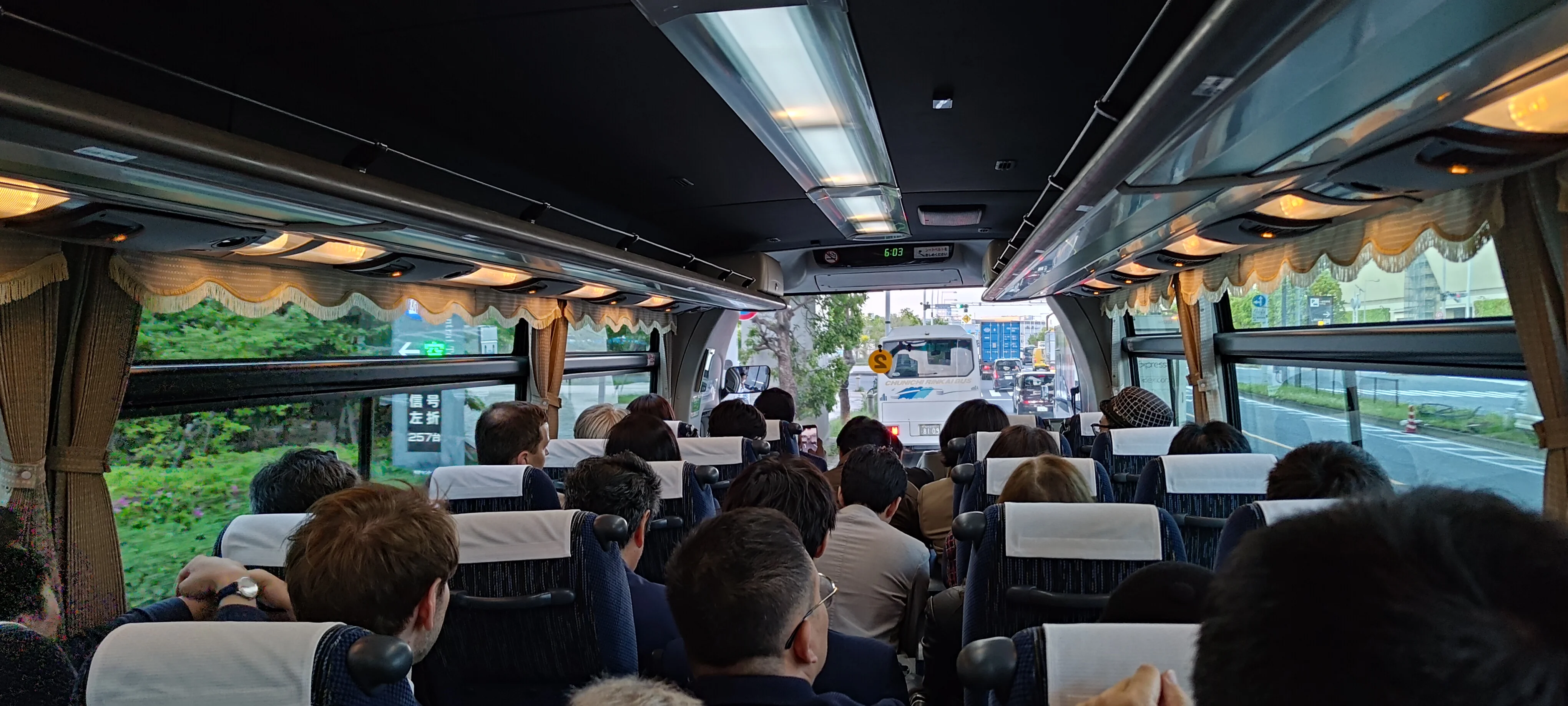
After hours, I caught the free shuttle bus from Big Sight to the Tokyo Innovation Base (TiB) in Yurakucho — Tokyo's flagship startup hub — for the Malaysia–Japan Industry Networking Night. The shuttle takes about 25 minutes and was completely full on the way in. Tip: line up 10 minutes before departure if you want a seat.
Two conversations stood out.
Yusuke Mori, CSO of Second Heart Asia — building a diabetes prevention and detection business. The number that landed for me: diabetes prevalence is roughly 8% in Japan but 20% in Malaysia. Their team is currently 15 people in Japan, expanding to Malaysia. The thesis is straightforward: Japanese diabetes-detection technology is mature and clinically validated, and the larger Malaysian patient population represents both a public health opportunity and a commercial one. Their service is doctor-led, which matters in markets where trust signals carry more weight than software polish.
Kayel Lee and Robin Hoo, founders of PAIX — AI agents for finance back-office work: bill processing, accounts payable and receivable, reconciliation, deal extraction. Five-person team. They're selling to CFOs at GLCs (Government-Linked Companies in Malaysia) first, planning to move down-market to mid-sized SMEs next.
What I appreciated about Kayel's framing of the AI-replaces-jobs question: at GLC scale, productivity gains flow back to the worker as 3x salary rather than 3x layoffs, because GLCs can absorb the cost. SMEs can't afford the same tooling at the same price points, so adoption flows top-down. It's a more nuanced version of the standard "AI takes jobs" narrative and matches what I'm seeing in our own customer base.
I ended up giving them about five minutes of free SEO advice, since they're at the early-content stage and asking the right questions: content matters but doesn't need to be high-volume (one or two pieces a week is plenty); focus on domain expertise, not long-tail keyword chasing; talk to your actual customers, then write about adjacent topics they care about; text outperforms video for SEO durability; expect six months minimum before seeing any change.
I also flagged some healthy skepticism around the "GEO" or "AI SEO" services that have started showing up — vendors promising they can get you "included in ChatGPT's answers" or "ranked in LLMs." It's worth understanding what's actually happening under the hood before paying for any of this. LLMs don't scrape the web in real time. When ChatGPT does search the web, it relies on Bing's index — confirmed both by OpenAI's VP of Engineering and by independent testing showing that 87% of ChatGPT search citations match Bing's top organic results. SEO still matters because that's what categorises a page in the index LLMs ultimately query. So if anyone is selling LLM ranking optimisation as a separate service, it's worth asking some sharp questions about what specifically they're optimising — because the category they're describing doesn't quite exist as a standalone discipline.
Lunch with Adrian Jones
Earlier in the day I'd taken a proper lunch break with Adrian, who's been a long-time friend and was supporting us for the day. Adrian's spent twenty-plus years in recruitment-industry sales, so when the conversation turned to AI in recruitment, it got useful fast.
The hot topic was ATS (Applicant Tracking System) failures. We'd both seen the same pattern from opposite sides: candidates who are obvious strong matches getting auto-rejected, jobs sitting open for nine months while the alert system keeps emailing the same matched candidate to "apply for this role" they've already been rejected from, no feedback ever returned. The AI is being deployed in the worst possible way — garbage filters in, garbage decisions out, and the entire candidate-experience surface degrades.
Adrian's thoughts on how recruiting service should be done were the genuinely useful part. The differentiator isn't the AI tooling. It's the human service quality on top of it: actually following up with every candidate, providing real feedback when someone isn't selected, never ghosting. Companies with strong brand names letting their ATS produce silent rejections are doing measurable damage to their employer brand without realising it. Service quality from the recruiter, in a market where everyone's automating that exact layer, becomes the moat.
LaLoka Labs Unofficial Meetup at Shinbashi
The day ended in 新橋 — サラリーマンの街 (Shinbashi) for our unofficial LaLoka Labs meetup, organised to coincide with SusHi Tech week. Started at 7:30 PM, wrapped up around 9:50 PM at an izakaya table with karaage, beer, and conversation that went genuinely wide.
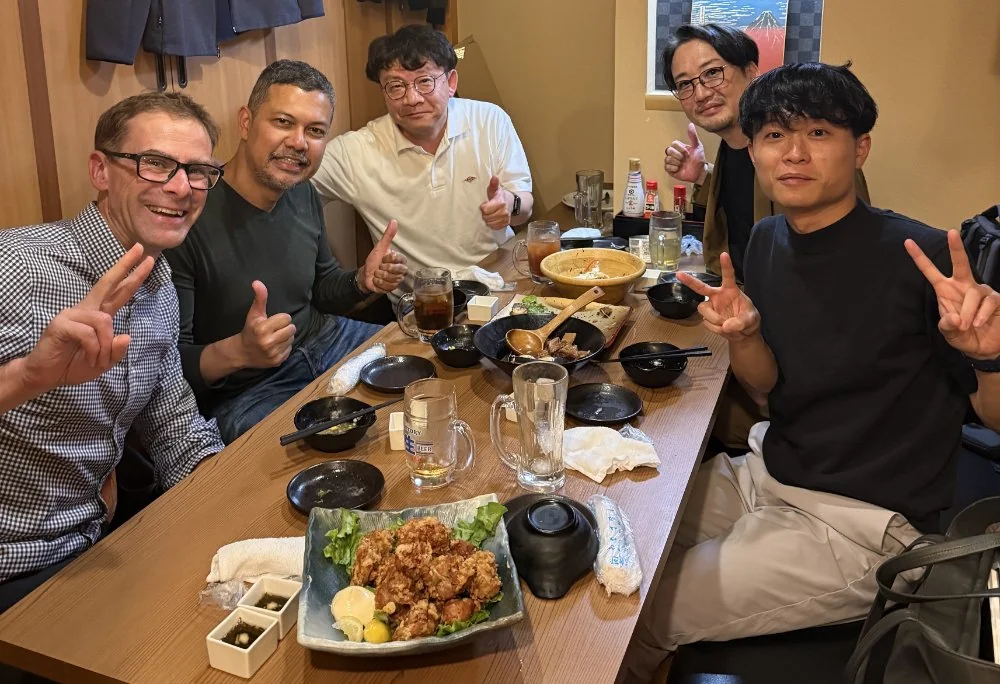
Ben Allen was at the table — Ben runs the Tokyo Python community, one of our community partners that helped promote SusHi Tech Tokyo 2026 to a slice of Tokyo's developer ecosystem we wouldn't have reached otherwise. I'd given a talk at Ben's Tokyo Python Spring Talks meetup on April 15 on how email actually works under the hood — the SPF/DKIM/DMARC/ARC stack and the Python libraries that make modern email programmable. The full write-up is on the KaiMail blog.
Worth flagging: meetup-driven channels like Tokyo Python are dramatically underrated as awareness vehicles for tech events in Tokyo. Official channels reach official audiences. Community partnerships reach the people who actually build things.
The conversation moved through business collaboration, community engagement, rugby, New Zealand, SEO, AIO (Answer Engine Optimization), culture, history, and a small bit of politics. The thing I keep noticing about these informal mixed-background meetups is that everyone at the table is pulling in the same direction — doing best work for customers and communities — but coming at it from completely different angles. That cross-pollination is genuinely hard to manufacture deliberately. It happens, or it doesn't. Tonight it happened.
Two-Day Takeaways
A few final observations after closing the booth.
Total contact tally: roughly 30 new connections across Days 1 and 2 — most worth a follow-up, a meaningful slice worth a real second meeting. The conversation themes that kept resurfacing were entering the Japanese market, the Kafkai Market Intelligence Report, and how AI is disrupting both industries and individual careers. Those three themes fit together more cleanly than I'd expected going in.
On the official conference app: useful for meeting scheduling and connection search, much weaker for actual contact exchange. No easy export, frequent disconnects, slow scanning, occasional forced re-logins. Most people quietly defaulted back to paper business cards or LinkedIn QR codes. A practical suggestion for the organisers: let people use whatever contact method they prefer, and focus the app on what only the app can do — venue navigation, session scheduling, ambassador-mediated introductions.
On SusHi Tech as an exhibition venue: my read aligns with Yasunaka Cho-san's. If your goal is Japan market entry positioning or VC visibility, SusHi Tech is among the strongest venues in Asia right now. If your goal is direct end-customer or partner discovery, it might be a less efficient channel because of how it's designed and the crowd it aims for.
On the broader signal: VCs working the floor directly, ministers from Estonia and Taiwan flanking the Tokyo Governor on the keynote stage, 49 countries' worth of city leaders, and Malaysian deep-tech founders comfortably navigating the Japanese SaaS landscape with active partner conversations. Tokyo wants to be Asia's startup capital, and after two days I'm more inclined to believe it can be.
To everyone who stopped by D-1108, exchanged cards, asked sharp questions, or just said hello — thank you. Thanks to Adrian for the support and the recruitment-industry reality check, and Ben for getting Tokyo Python behind the event — domo arigatou.
We won't be at Public Day, but if you were one of the people I missed, the contact details are on kafkai.com and our affiliates and reseller partnership programs are always open.
Disclaimer: All of the things that I wrote above were based on my own memory, notes and some research I did but some (or even all!) of the names and claims made in this post might be wrong.
Until the next conference.