


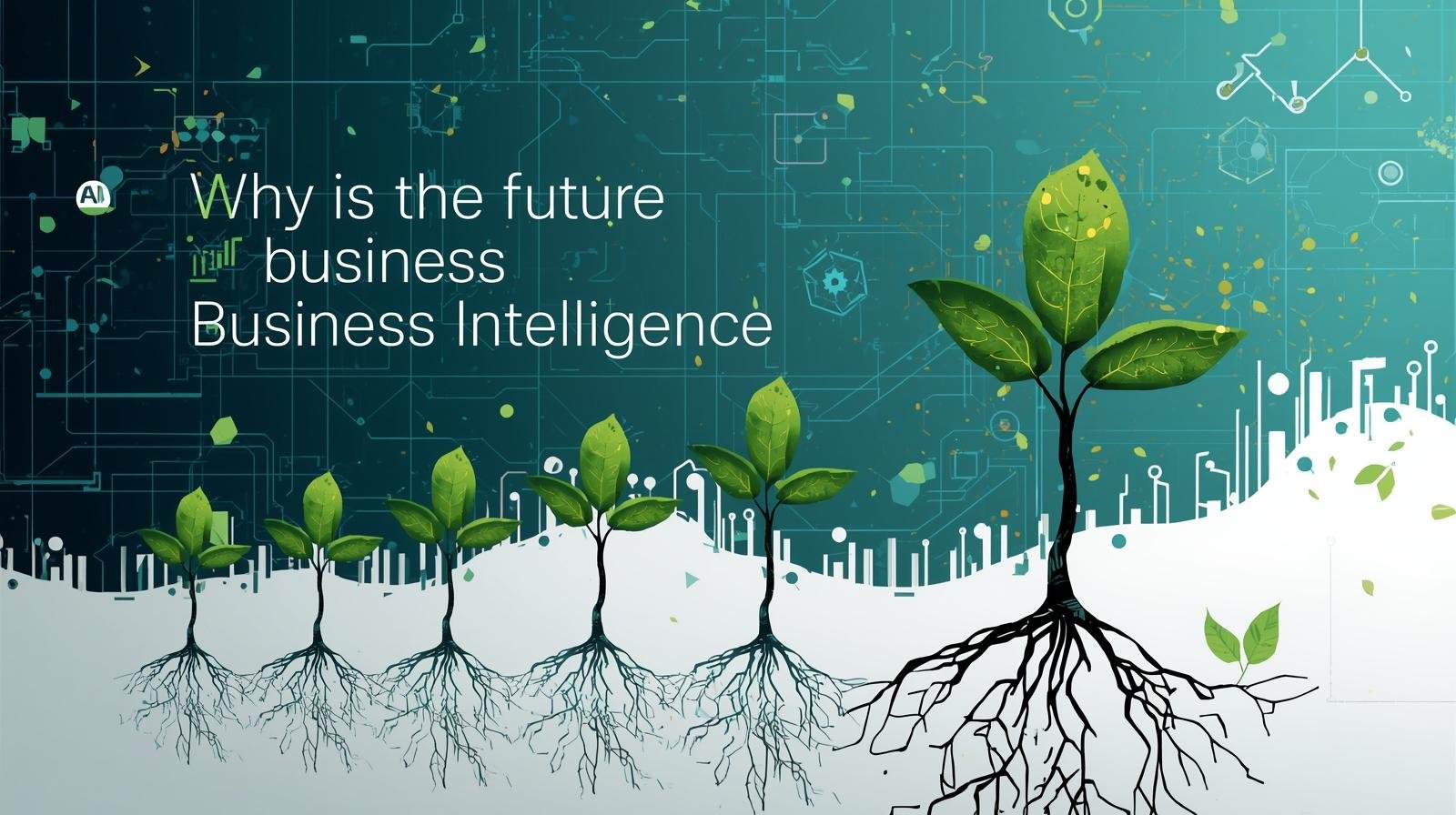
Remember the old days when business intelligence meant staring at endless spreadsheets and dashboards, trying to figure out what happened last quarter? Those days aren’t gone, but they’re fading fast. Business intelligence (BI) used to be reactive, telling companies what already happened. Fast forward to 2025, and AI has stepped in to completely change the game. Now, instead of simply reporting the past, businesses can predict the future, spot hidden opportunities, and make smarter decisions in real time. That’s why AI isn’t just a trend in BI, it’s the future.
Traditional BI: Useful but Limited
Traditional BI was great for its time. Analysts would gather data, run queries, and produce reports that showed trends and performance metrics. But there was a problem: it was slow, manual, and often too narrow. By the time a report reached decision-makers, the insights could already be outdated. And it relied heavily on humans asking the right questions, something that doesn’t always happen in fast-paced markets.
Think about it like this: traditional BI is like using a map to plan a road trip, while AI-driven BI is like having GPS that also predicts traffic jams, suggests alternate routes, and warns you if your car might run out of fuel before the next stop. That’s the level of advantage AI brings.
How AI Transforms Business Intelligence
AI doesn’t just make BI faster, it makes it smarter. Instead of waiting for humans to define every query, AI systems learn from data, spot patterns, and even uncover insights humans might miss. Imagine being able to analyze millions of data points in minutes, detecting customer behavior trends or operational inefficiencies that would take teams days, or weeks, to notice. That’s the power of AI-driven BI: it allows businesses to be proactive, not reactive.
AI also handles unstructured data, things like social media posts, customer reviews, and emails, which traditional BI tools struggle with. This means companies get a fuller, richer picture of what’s happening, both inside and outside their organization.
From “What Happened?” to “What Will Happen?”
Traditional BI tells you what happened. AI-powered BI tells you what will happen and even what you should do next. Predictive analytics can forecast trends, customer behavior, and future sales. Prescriptive analytics goes a step further, recommending actions based on those predictions.
For example, imagine an e-commerce company noticing a sudden dip in purchases. Traditional BI might report the dip, leaving decision-makers to guess why. AI-driven BI, on the other hand, could detect which products are underperforming, predict the potential revenue loss, and suggest promotional strategies, all before the issue escalates. That’s the level of foresight companies need to compete in 2026 and beyond.
Real-Time Insights: No More Waiting
One of the most exciting benefits of AI in BI is real-time decision-making. Businesses today operate 24/7. Customers browse, shop, and interact online at all hours. AI can process streaming data instantly, allowing businesses to react immediately.
Imagine a retail chain noticing unusual buying patterns in one store. AI can alert managers instantly, suggest adjustments to inventory or pricing, and even predict future demand. Without AI, this would take a human team hours, or days, to figure out.
Making BI Accessible for Everyone
One of the biggest barriers to BI has always been access. Traditional tools required analysts to write complex queries or know how to manipulate databases. AI is changing that. Many AI-powered BI tools use natural language processing, meaning you can ask questions in plain English, like “Which products are likely to sell out next week?” and get actionable insights immediately.
This democratization of BI is powerful. When managers, marketers, and team leaders can access insights without waiting for analysts, decision-making becomes faster and more informed. It’s like giving everyone in your organization a crystal ball, but based on real data, not guesswork.
AI Finds Hidden Opportunities
AI excels at spotting patterns and relationships that humans might overlook. It can uncover customer segments likely to churn, products with untapped potential, or inefficiencies in supply chains. These automated insights aren’t just convenient, they’re strategic advantages.
For example, an AI system might notice that a particular group of customers tends to buy certain products together. A traditional report might show the sales numbers, but AI can suggest cross-selling strategies, personalized campaigns, and ways to boost revenue that humans would never have identified on their own.
Smarter Forecasting and Strategic Planning
AI doesn’t just react; it plans ahead. Companies can model scenarios, test assumptions, and forecast outcomes with much higher accuracy than before. Whether it’s budgeting, staffing, or inventory management, AI-powered BI provides the foresight needed to make informed decisions.
Consider a logistics company managing hundreds of delivery routes. AI can predict delays caused by weather, traffic, or vehicle maintenance and adjust plans proactively. In this sense, AI turns business intelligence into a real-time decision engine.
Integrating AI Across the BI Workflow
AI is not just a separate feature, it’s integrated across the entire business intelligence workflow. From collecting and cleaning data to analysis and visualization, AI improves speed, accuracy, and efficiency. This integration means businesses can focus less on manual work and more on action that drive growth.
Challenges and Responsible AI
AI in business intelligence isn’t perfect. It depends on high-quality data and careful management. Poor data leads to inaccurate insights, and AI models can unintentionally perpetuate bias. Transparency and ethics are critical. Businesses must implement responsible AI practices, ensuring that predictions are explainable and decisions can be trusted.
Why Companies That Ignore AI Will Fall Behind
The future of BI is AI-driven. Companies that embrace AI gain faster insights, better predictions, and more strategic decision-making capabilities. Companies that stick with traditional BI risk falling behind in a world where speed and accuracy matter. In 2026, AI won’t be optional, it will be a necessity for staying competitive.
AI Is Not the Future, It’s Already Here
AI is transforming business intelligence from a tool that reports the past to a system that guides the future. It enables businesses to predict trends, respond in real time, and uncover hidden opportunities. In a world where data grows exponentially and markets change rapidly, AI-powered BI is no longer just an advantage, it’s a requirement. Companies that harness AI will make smarter, faster, and more informed decisions, positioning themselves for success now and in the years to come.